


Private Label Probiotic Manufacturing in India: Process, Benefits, and How to Choose the Right Contract Manufacturer
Private Label Probiotic Manufacturing in India: Process, Benefits, and How to Choose the Right Contract Manufacturer
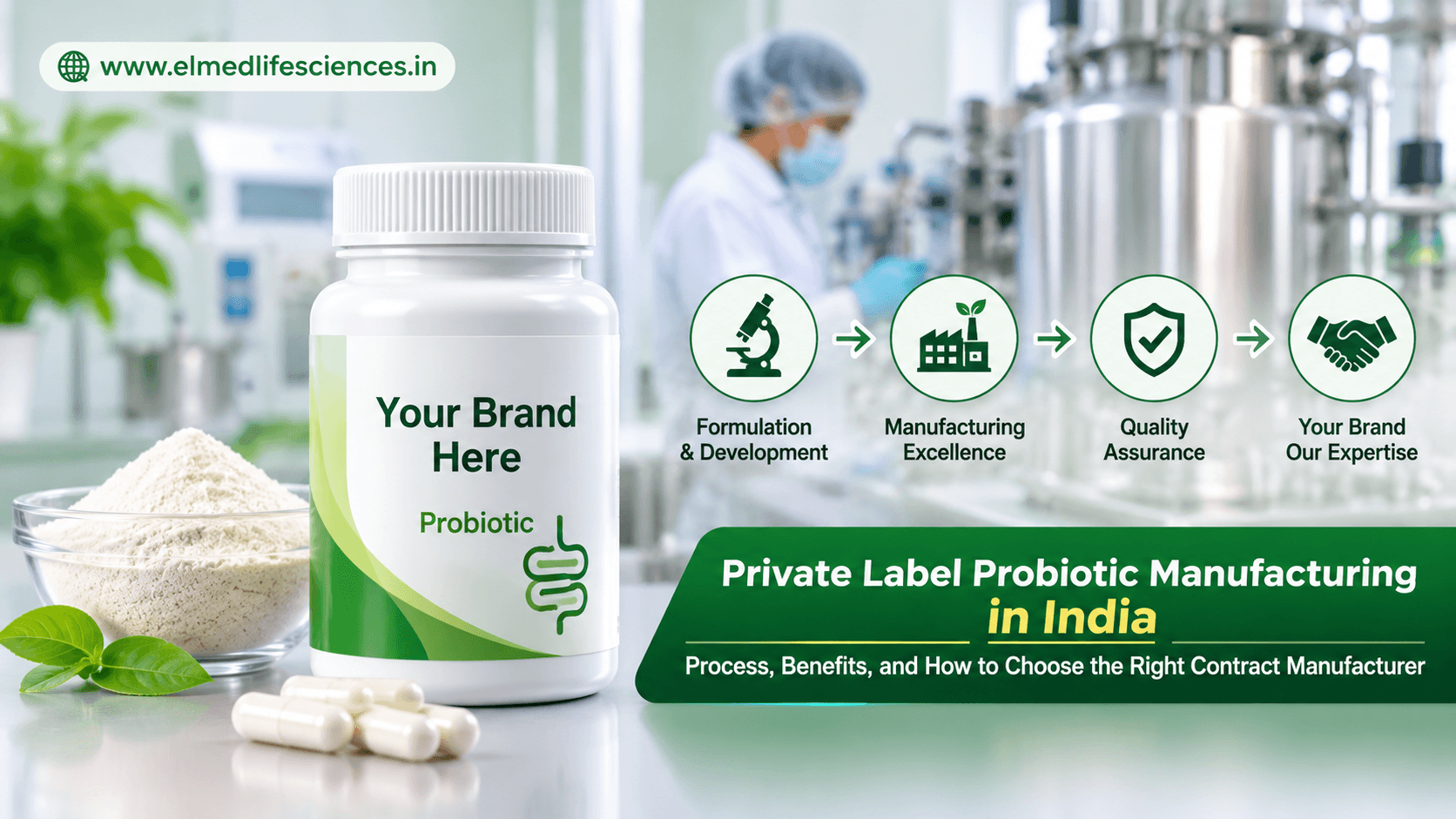
Private Label Probiotic Manufacturing in India
Probiotic products are gaining ground everywhere—human health, animal feed, aquaculture, and farming. Companies see potential in these products for everything from gut health to better yields or cleaner pond water. But actually making these products? That’s a whole different ball game. It takes more than just a good idea—you need technical know-how, the right equipment, tight quality checks, and expert hands on deck.
So, what’s the smartest way for a business to get into the probiotic game, or just add a few options to their lineup? Private label probiotic manufacturing is a practical route. You get to build your brand and sell products under your name, while an experienced manufacturer handles messier bits like formulation, production, testing, and packaging.
India’s no stranger to the world of microbial manufacturing. Thanks to a solid pharmaceutical backbone and access to both local and global markets, plenty of companies here can handle large-scale probiotic production. Still, picking the right partner is crucial—product quality, regulatory hurdles, and lasting business ties are all on the line.
In this guide, I’ll break down the private label probiotic manufacturing process, your main benefits, what to look for in a manufacturing partner, and why India is a good place to start.
What Is Private Label Probiotic Manufacturing?
In plain English, Private label probiotic manufacturing is when an entity uses a manufacturer to produce probiotic products for it, and then sells those products under its own label. Your organisation is not required to construct an elaborate manufacturing plant or tinker with specific technological difficulties – your collaborator does that.
-Choosing the probiotic strains.
- Formulation development and testing.
- Production in large quantities.
- Processing, mixing, packing, and labelling the products.
- Dealing with regulatory documentation.
- Modify or build something if you desire it to be different.
Private Label vs. Contract Manufacturing—What's the Difference?
They are not the same, but the same. Here's how this happens:
- Private label production: you work from an existing formula (adjusted or not) and sell it under your name. Ideal for companies looking for quick and easy.
- Contract manufacturing is a bit more flexible. You want a made-from-scratch product to your specifications, and you get to put your brand on it as well.
Which is the best? It depends on how fast you want to get to market, whether you need specialty products, and your reasons for doing the project.
How Does the Private Label Probiotic Manufacturing Process Work?
1. Understanding Business Needs
The manufacturer will want to know things like intended application, target clients, strains required, product format (powder, liquid or capsule), package style, and expected order sizes. Regulatory requirements are also a problem here. And good communication up front prevents headaches later.
2. Probiotic Strain Selection
Choosing the right microbes is vital. Strains like Lactobacillus, Bifidobacterium, Bacillus, and more can be for people, pets, aquaculture, or plant use, but they’re not one-size-fits-all. The chosen strain needs to match the final product—don’t mix these up.
3. Development of Formulation
Once you have a strain, it’s time to formulate. Formulators choose carriers, stabilisers, and protectants that will keep the product safe and stable. Powder formulations might be targeted to absorb or repel moisture; liquids might be targeted to prevent contamination. All elements are selected and formulated according to the strain, intended application, packaging, and shelf life.
4. Large-scale production
So, batch time for the big run. Production includes preparation of culture media, preparation of the microorganisms, harvesting or concentrating the biomass, drying and blending, if necessary, and processing and packing. They monitor the heat, pH, oxygen, and contamination hazards at every stage.
5. Quality Testing and Documentation
Clarity is the name of the game. All lots are inspected for identity, number of cells, level of viability, level of purity, extraneous contaminants, residual moisture, stability, and package integrity. The manufacturer should be able to provide you with certificates, specifications, and quality records for each lot.
6. Packaging, Labeling and Delivery
The packaged final product is ready to be shipped and should be protected from moisture, as well as temperature changes, and labeled properly. If you're exporting, always verify the requirements for each country, as labels and paperwork can be critical.
What Are the Benefits of Private Label Probiotic Manufacturing?
Skip the Heavy Investment
Building a fermentation plant and lab is expensive and time-consuming. With a private label, you use another company’s setup. You save on upfront costs, people, and time.
Faster to Market
Relying on existing expertise or proven formulations means you’re ready to sell sooner. Custom formulations add some time, but you still save months over going it alone.
Expert Guidance
Manufacturing partners know their microbes, how to keep products stable, how to prevent contamination, and how to stay within legal lines. You get all that knowledge without staffing up a research department.
Flexibility
You aren’t stuck with one product or format. Manufacturers often offer a range—different dosages, forms, packaging, or even fully custom solutions.
Total Brand Control
All the lab work is outsourced, but your brand is front and center. You can focus on growing your business, customer service, and marketing.
Who’s Using Private Label Probiotic Manufacturing?
You see probiotics in:
- Human health (supplements for digestion, microbiome balance, etc.)
- Animal feed (better nutrition for livestock, poultry, or pets)
- Aquaculture (pond water quality and microbe management)
- Agriculture (soil health, crop protection, biofertilizers—think Rhizobium, Trichoderma, and others)
How to Choose the Right Partner in India
Don’t just chase the lowest price or biggest factory—ask deeper questions:
- Can they meet your current and future order sizes reliably?
- How well do they know the regulatory scene in your segment (food, feed, agri, export)?
- Can they help with packaging that keeps your product viable and looking good on shelves?
Why Elmed Life Sciences?
Elmed Life Sciences, based in Hyderabad since 2018, stands out with expertise across human health, animal nutrition, aquaculture, and agriculture. They’ve got ISO 22000:2018 and GMP certifications. Their team can help you design new formulations, handle bulk orders, manage your brand’s packaging and export needs, and provide all the paperwork and support along the way. With experience supplying over 30 countries, they know what it takes to meet domestic and global standards.
Summary
Create your own whole line of probiotic goods without the need to start from scratch. Choose a quality partner with competence in technical, quality, and compliance activities who can meet standard and custom needs. Elmed Life Sciences is a one-stop, end-to-end service provider that can help you from concept to manufacture, packaging, and international distribution.
Frequently Asked Questions
Key inquiries on strain selection, soil application, and biological soil regeneration.
This is where a producer creates probiotic items you may resell under your own brand. They do formulation, manufacturing, testing, packaging, and label design.
Commercial Probiotic Formulations & Bulk Supply
Partner with ELMED Life Sciences for high-potency bulk probiotic strains, custom CFU concentrations, and certified manufacturing for agriculture, aquaculture, and animal health.
Related Articles & Insights
Explore more formulation notes and probiotic science from ELMED
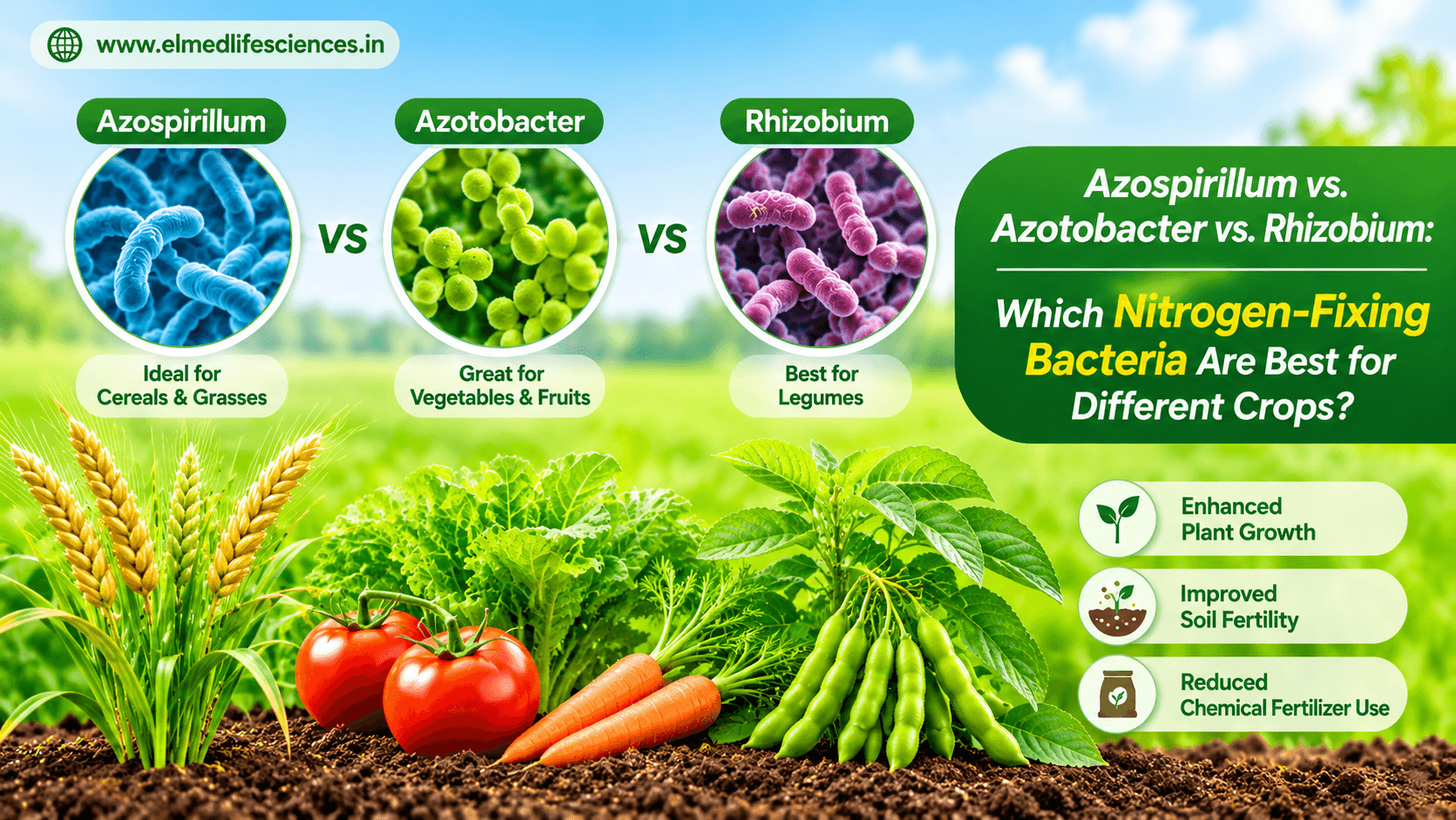
12 Nov 2026
Azospirillum vs. Azotobacter vs. Rhizobium: Which Nitrogen-Fixing Bacteria Are Best for Different Crops?
Azospirillum vs. Azotobacter vs. Rhizobium: Which Nitrogen-Fixing Bacteria Are Best for Different Crops? Compare roles and selection factors.
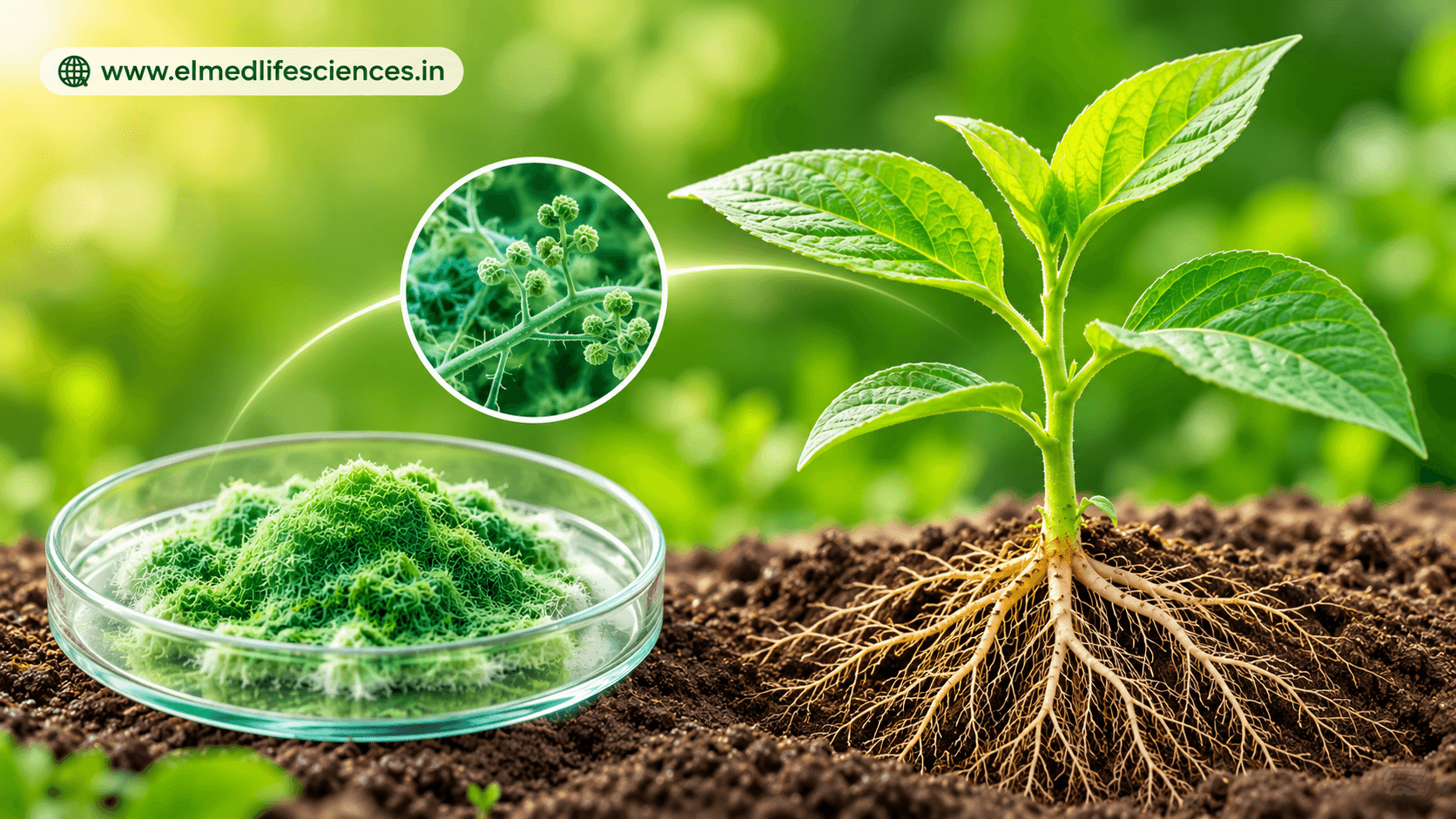
12 Nov 2026
Trichoderma Harzianum: Benefits, Applications and Role in Biological Plant Disease Management
Learn about Trichoderma Harzianum: Benefits, Applications and Role in Biological Plant Disease Management, including its agricultural context.

27 Oct 2026
Get to Know the Benefits, Types and Applications of Probiotics in Aquaculture for Shrimp and Fish Farming
Get to Know the Benefits, Types and Applications of Probiotics in Aquaculture for Shrimp and Fish Farming, including how probiotics support shrimp and fish health, growth and water management.