


Azospirillum vs. Azotobacter vs. Rhizobium: Which Nitrogen-Fixing Bacteria Are Best for Different Crops?
Azospirillum vs. Azotobacter vs. Rhizobium: Which Nitrogen-Fixing Bacteria Are Best for Different Crops? Compare roles and selection factors.
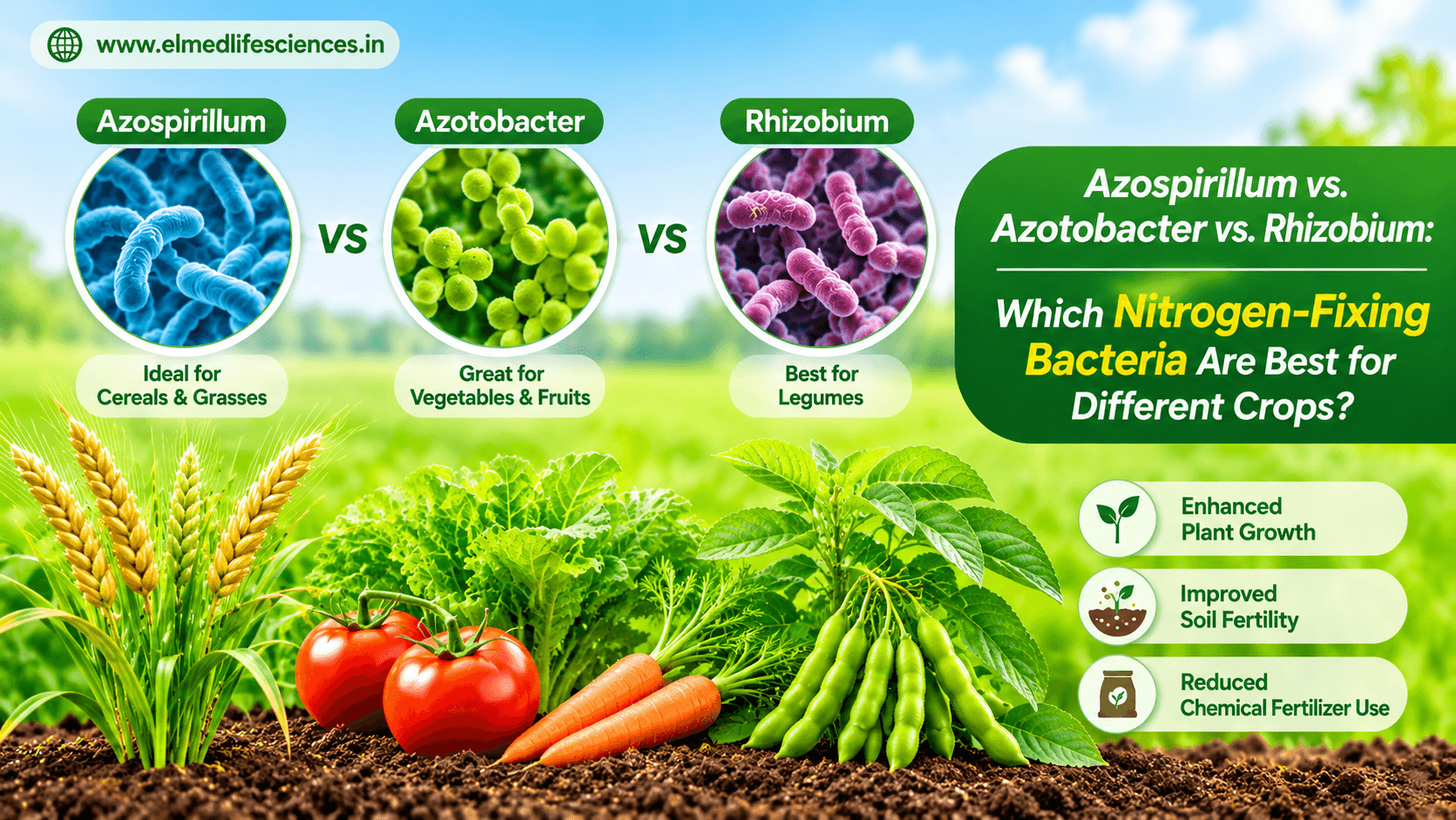
Azospirillum vs. Azotobacter vs. Rhizobium
Nitrogen is a huge deal in terms of developing healthy crops. Plants require it for everything from building robust stems and leaves to producing chlorophyll and proteins. The funny thing is? There’s plenty of nitrogen floating around in the air, but most plants can’t draw it directly from the atmosphere. Rather, they take nitrogen from the soil, which is often made by natural processes or additional fertilisers.
Each one has a specific role: Azospirillum likes to hang out with grain and grass crops, helping roots grow robustly. - Azotobacter is a free-living nitrogen fixer; it makes its nitrogen in the soil, without a plant partner. Rhizobium has a special relationship with legumes (such as soybeans or chickpeas) and forms special nodules on the roots where the nitrogen is fixed.
The selection of which micro-organisms to use is not a pure science but an applied one. For a farmer or a person collecting biofertilizers, knowing the strengths of each variety will help them determine what is best for their crops.
What are these nitrogen-fixers and how do they work?
Nitrogen-fixing bacteria use an enzyme system called nitrogenase to change nitrogen from the air into ammonia. The plants can take in this new form of nitrogen, and the process is classified into three fundamental types:
-Symbiotic: The bacteria form nodules on plant roots, especially on leguminous plants. (That’s a rhizobium.)
- Associative: The bacteria snuggle up to plant roots and help out the rhizosphere. (Azospirillum does)
- Free-living: The bacteria operate independently, fixing nitrogen right in the soil. (This is Azotobacter’s thing.)
What Is Azospirillum?
Azospirillum
Azospirillum is the go-to bacterium for grasses and cereals. It doesn’t form nodules like Rhizobium but attaches closely to roots, boosting their growth and helping plants absorb water and nutrients. Farmers use it mostly with rice, wheat, maize, sorghum, millet, sugarcane, and other grass crops. Want better roots and healthier plants? Azospirillum is your friend—just pick the strain suited to your crop and soil.
Azotobacter
Azotobacter lives freely in soil. No root nodules needed—it just gets to work fixing nitrogen. Aside from that, this bacterium may churn out compounds that encourage roots to grow and help crops get established. You often see Azotobacter used for wheat, rice, maize, cotton, mustard, sugarcane, vegetables, oilseed crops, and millets. If you’re looking for a biofertilizer that doesn’t need a specific plant host, Azotobacter does the trick.
Rhizobium
Rhizobium is all about legumes. It moves in, infects the roots, and sets up nitrogen-fixing nodules. The plant feeds the bacteria carbohydrates; the bacteria pay back with nitrogen. It’s a win-win, especially for soybeans, chickpeas, lentils, peas, groundnuts, and other pulses. There’s a catch, though: Rhizobium is picky. Each legume needs a compatible Rhizobium strain. So don’t grab just any inoculant—find the one made for your crop.
Comparing Azospirillum, Azotobacter, and Rhizobium
All three are nitrogen fixers; however, they do so differently and on various crops: - Azospirillum: Root associates, mainly in grains and grasses. No nodules. - Azotobacter: A free-living soil inhabitant associated with some non-leguminous crops. There are no nodules. Rhizobium: symbiotic, forms nodules with legumes.
If you need nitrogen fixation without a plant host, try Azotobacter. Azospirillum stays close to roots but does not require the plant to create nodules as does Rhizobium that must have a legume to set up its symbiotic association.
Azospirillum and Azotobacter are good for root development because they create growth stimulators. Of the two, Azospirillum has been shown to alter root morphology by promoting the production of lateral roots and root hairs. It is the rhizobia that allows legumes to make their special nodulation.
Which bacteria are ideal for which crops?
Start with your crop:
- Cereals (rice, wheat, maize): Azospirillum or Azotobacter.
- Pulses (soybean, chickpea, lentil): Rhizobium—make sure you get the right strain!
- Oilseeds: Legume oilseeds (groundnut, soybean) need Rhizobium or Bradyrhizobium; non-legumes (mustard) do well with Azotobacter.
- Sugarcane: Azospirillum and Azotobacter.
- Vegetables: Azotobacter for non-legumes, Rhizobium for legume veggies, Azospirillum as needed.
Why Elmed Life Sciences?
Elmed Life Sciences sells Azospirillum, Azotobacter and Rhizobium in bulk to farmers, distributors and retail agricultural businesses. Elmed Life Sciences specialises in custom formulations and private label production with strong quality controls, so when you need to ramp up production or customize a biofertilizer blend, we have the capability.
In summary
Responsible for providing nitrogen to crops, Azospirillum, Azotobacter, and Rhizobium have different roles to play. Azospirillum works with cereals and grasses; Azotobacter works independently in soil; Rhizobium works with legumes in nodules on roots and rhizomes. Which microbe is best suited to your crop, your soil, and the end-product depends on the choice you make. Using the correct treatment can improve soil quality and move towards more sustainable agriculture. Elmed Life Sciences provides you with an assured solution to your bio-fertilizer needs if you are in the agri-business.
Frequently Asked Questions
Key inquiries on strain selection, soil application, and biological soil regeneration.
Azospirillum is a root-colonizing bacterium of grass/cereal; Azotobacter is a soil inhabitant; Rhizobium is found in nodules of legume roots.
Commercial Probiotic Formulations & Bulk Supply
Partner with ELMED Life Sciences for high-potency bulk probiotic strains, custom CFU concentrations, and certified manufacturing for agriculture, aquaculture, and animal health.
Related Articles & Insights
Explore more formulation notes and probiotic science from ELMED

12 Nov 2026
Private Label Probiotic Manufacturing in India: Process, Benefits, and How to Choose the Right Contract Manufacturer
Private Label Probiotic Manufacturing in India: Process, Benefits, and How to Choose the Right Contract Manufacturer

12 Nov 2026
Trichoderma Harzianum: Benefits, Applications and Role in Biological Plant Disease Management
Learn about Trichoderma Harzianum: Benefits, Applications and Role in Biological Plant Disease Management, including its agricultural context.

27 Oct 2026
Get to Know the Benefits, Types and Applications of Probiotics in Aquaculture for Shrimp and Fish Farming
Get to Know the Benefits, Types and Applications of Probiotics in Aquaculture for Shrimp and Fish Farming, including how probiotics support shrimp and fish health, growth and water management.